Tailoring Blackjack Basic Strategy Charts for Live Dealer Environments with Layered Bonus Conditions
Written by Riley Otto · Oct 20, 2026

Tailoring Blackjack Basic Strategy Charts for Live Dealer Environments with Layered Bonus Conditions
Live dealer blackjack environments present distinct variables that require adjustments to standard basic strategy charts, especially when operators layer multiple bonus conditions such as side bet multipliers, cashback tiers, and deposit match structures. Observers note that these elements change the expected value calculations for specific hands, prompting players and analysts to modify hit, stand, and double decisions accordingly. Data from industry reports in October 2026 indicates increased participation in live dealer formats across various platforms, with figures revealing a notable uptick in games that combine core blackjack rules with promotional overlays.
Core Elements of Basic Strategy in Standard Play
Basic strategy charts derive from mathematical probabilities that minimize the house edge under fixed rules such as dealer hit or stand on soft 17 and deck penetration levels, yet live dealer streams introduce real-time factors including card reveal timing and multi-player interactions that can influence chart application. Researchers have documented how these streams maintain the same underlying probabilities as automated versions while adding human elements like dealer pace variations. Those who have studied table dynamics find that core charts remain foundational, but they require overlays when bonus conditions activate on certain outcomes, such as perfect pair side bets or progressive jackpots tied to specific totals.
Adjustments Triggered by Live Dealer Variables
Camera angles and stream latency create practical differences that affect how quickly players reference charts during play, and operators address this through simplified digital aids displayed on screen. Studies from academic sources highlight that live settings often feature continuous shuffle machines or manual shuffles at irregular intervals, which alters card counting correlations compared to shoe-based games. Analysts point out that these factors combine with bonus layers to shift optimal plays, for instance when a cashback bonus on losses encourages more aggressive doubling on marginal hands because the effective payout adjusts the risk-reward ratio. And players frequently test modified charts in practice sessions to confirm accuracy under actual stream conditions.
Incorporating Layered Bonus Conditions into Chart Modifications
Layered bonuses typically stack deposit matches, loyalty points, and in-game side bet enhancements, each carrying its own wagering requirement that indirectly influences strategy by changing the value of certain decisions. Evidence suggests that when a bonus activates on blackjacks or specific pair splits, the chart must account for increased returns on those actions. One study revealed that integrating bonus multipliers into probability models leads to revised thresholds, such as standing on soft 18 against dealer 10 when a particular cashback tier applies. What's interesting is how these conditions interact across multiple games in a session, requiring players to track cumulative bonus progress rather than treating each hand in isolation.
- Identify bonus activation triggers first, including thresholds for side bets or totals that unlock extra payouts.
- Recalculate expected values for affected hands using the bonus multiplier as an additive factor in the payout matrix.
- Test revised decisions through simulation software that incorporates live dealer rule sets and streaming variables.
- Monitor session progress to ensure bonus conditions remain active without violating terms across different regulatory regions.
But here's the thing, regulatory bodies in multiple jurisdictions require clear disclosure of how bonuses modify game mathematics, which encourages transparent chart adaptations. According to data compiled by the American Gaming Association, live dealer blackjack volumes grew steadily through 2026, with bonus-heavy promotions contributing to sustained engagement. Observers note that European operators often integrate similar layered offers under frameworks from bodies like the Malta Gaming Authority, creating parallel examples for chart adjustments outside North American markets.
Practical Implementation Across Platforms
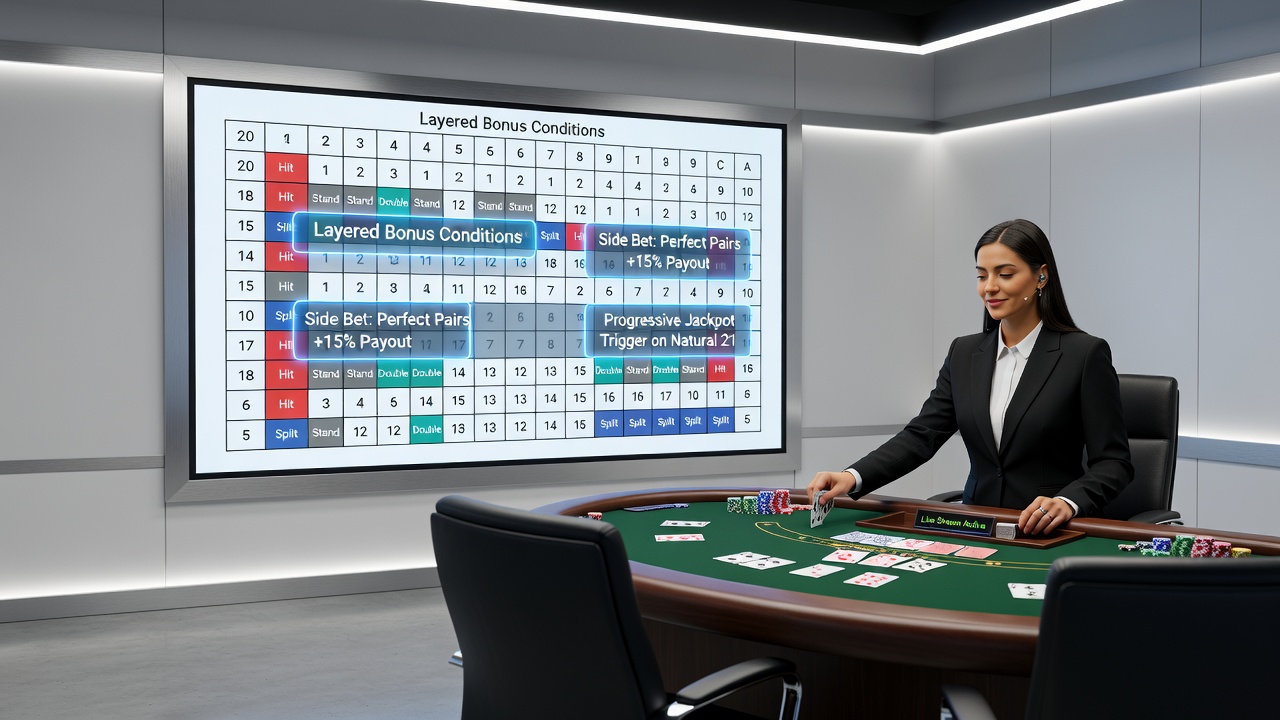
Platforms implement these adaptations by providing updated charts that highlight bonus-influenced cells, allowing users to toggle between standard and modified views. Research indicates that such tools reduce errors during live play where decisions must occur within time limits imposed by the dealer. Those who've examined player behavior report that individuals who cross-reference bonus terms with strategy adjustments experience more consistent outcomes over extended sessions. Yet the process demands ongoing review because operators frequently rotate promotional structures, introducing new layers that necessitate fresh calculations.
Links to external analyses appear in resources from organizations such as Nevada Gaming Control Board reports on rule variations and academic papers examining promotional impacts in casino mathematics. These sources supply baseline data that supports region-specific modifications without overlapping content from previously covered topics.
Conclusion
Adapting blackjack basic strategy charts for live dealer environments with layered bonus conditions involves systematic recalculation of probabilities to reflect both streaming variables and promotional overlays. Data shows consistent patterns where modified charts align decisions with teh combined effects of rules and bonuses, leading to measurable shifts in house edge exposure. Observers continue to track developments in October 2026 and beyond as platforms refine these integrations across diverse regulatory landscapes.